Case Study — 2026
VESS Studio
A premium Pilates studio ran on rented software, with another company’s name inside its app. In twelve weeks, working solo, I gave VESS a system of its own, from the website to an app approved on the App Store, with both studios and billing in one place.
- Client
- VESS Wellness Lab · Brasília
- Year
- 2026
- Role
- Product engineer, solo, from proposal to stores
- Platforms
- Web · iOS · Android · Admin
- Timeline
- 12-week build, then ongoing evolution
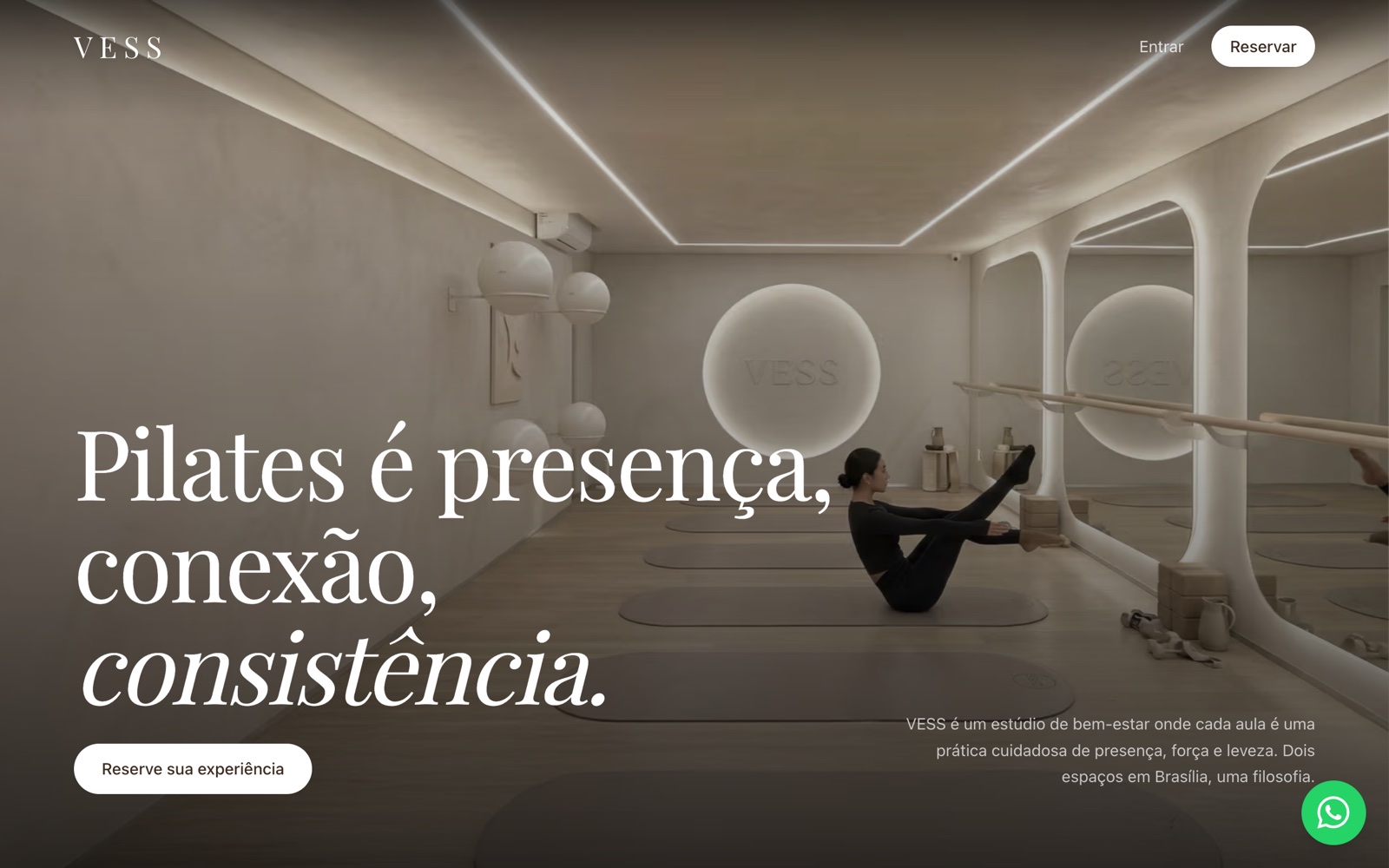
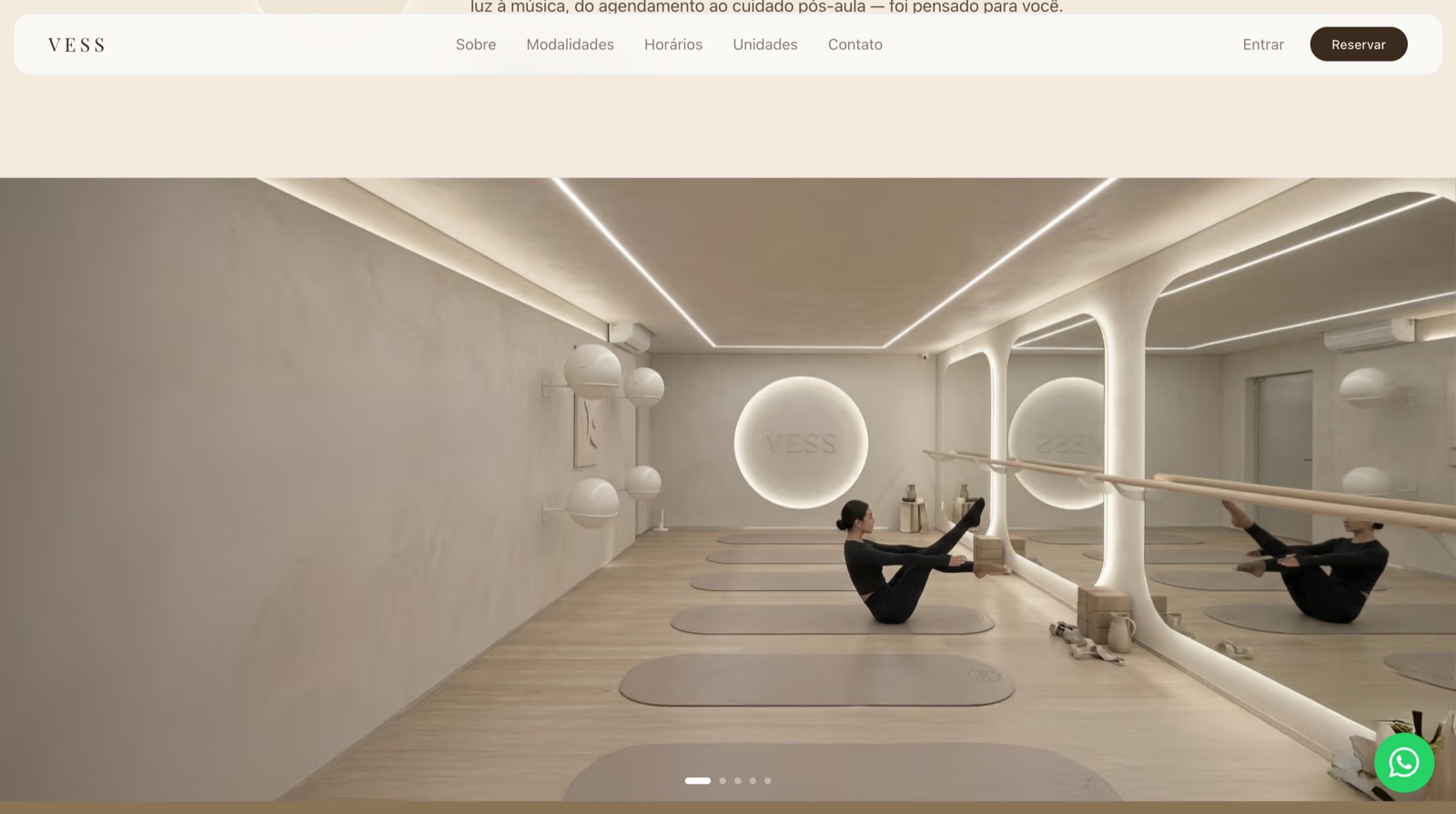
VESS Wellness Lab runs two Pilates studios in Brasília and cares about every detail, from the light in the room to the music in class. The software didn’t keep up. Students booked through a dated app with a vendor’s "powered by" on it, while the studio paid a fee that grew with every new student and its data stayed locked in the SaaS.
I was hired to replace all of it with a system carrying the VESS brand end to end. I did a whole team’s work alone, from the commercial proposal to App Store approval, and every screen I designed I also coded. The build took twelve weeks. Today the system runs both studios with real bookings and real payments.
What I did
01 — The problem
A premium brand with another company’s name in its app
People train at VESS for a carefully crafted experience. To book a class, though, students opened a dated app with another vendor’s "powered by" on it.
For the owners, the numbers didn’t work either. The software fee grew with every new student, and the studio’s data stayed with the vendor. They wanted predictable costs and their data in their own hands.
02 — Decision: validate before building
The owners approved every screen before the first line of backend
Before any screen, I mapped the business with the owners: 92 requirements and the journey of each of the five roles, from student to owner.
In the first sprint, I prototyped every MVP screen and validated it with them. Changing a rule in a prototype is cheap. Changing it once the system is built is expensive.
Alignment meetings became routine and carried on through the project, up to migrating the student base from the old system.
03 — Decision: one system
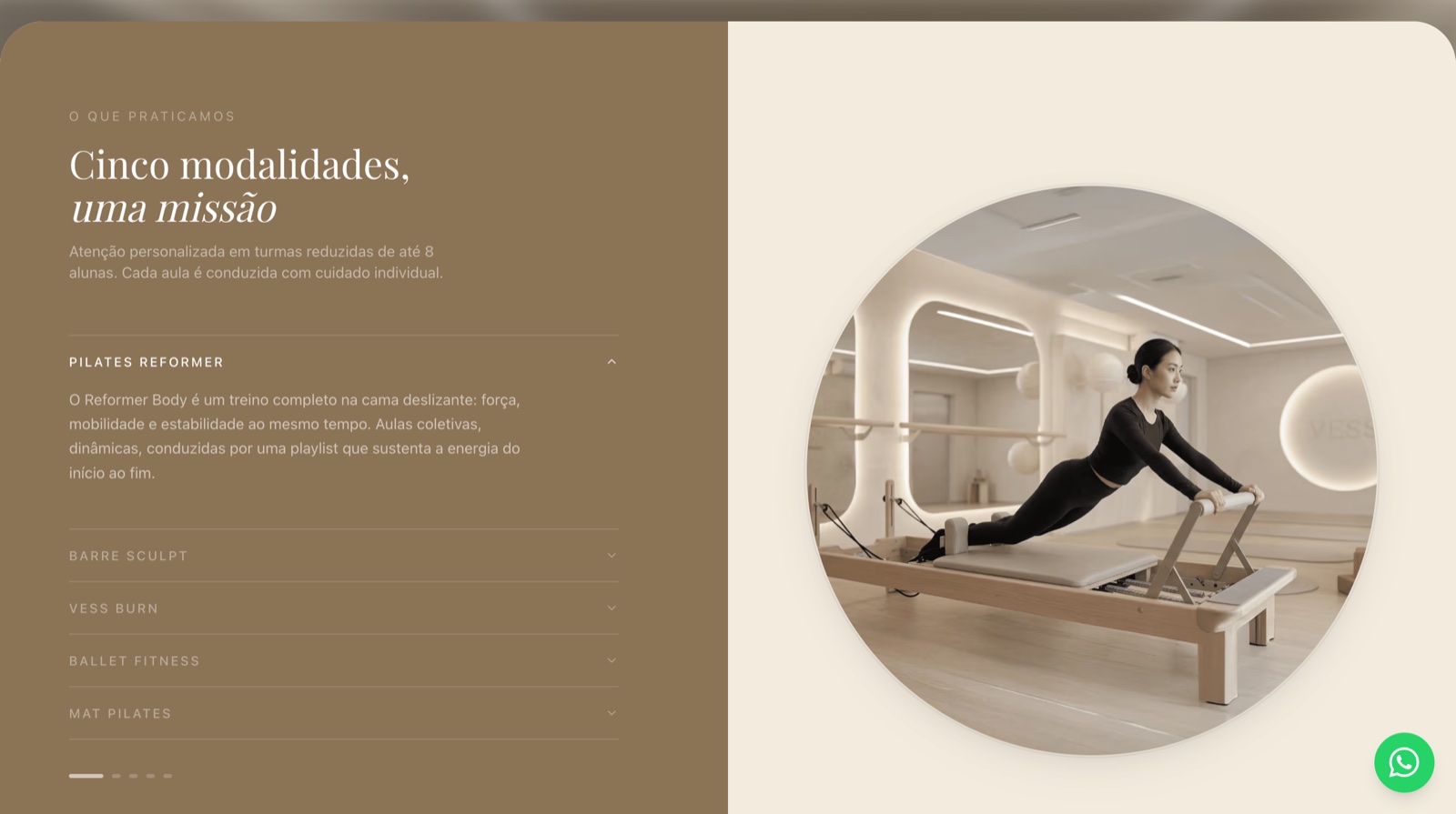
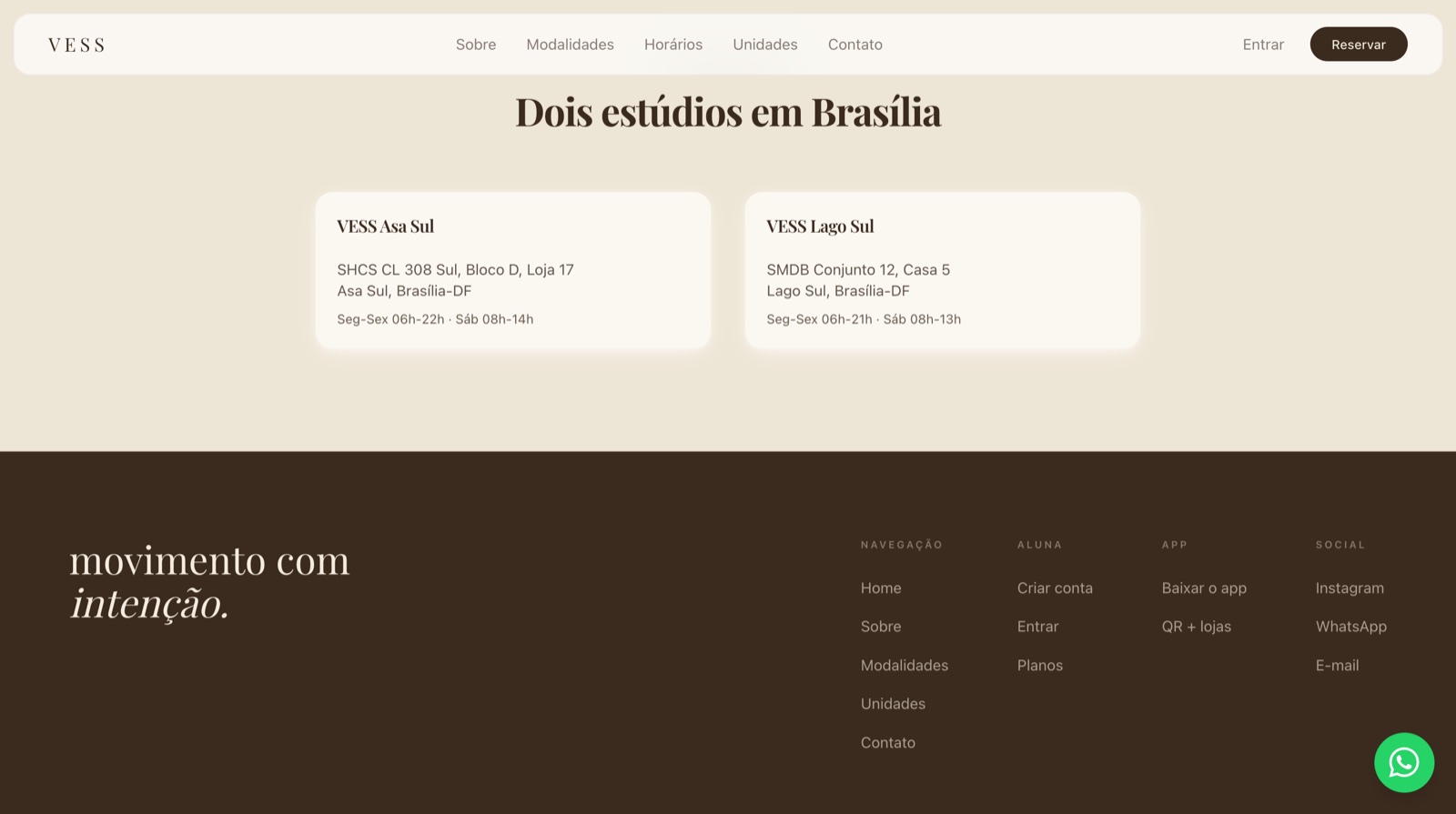
Both studios in one panel, each with its own data
The website, the app and the admin read the same data. A class booked on a phone shows up on the front desk’s schedule, and billing runs off the same record.
The whole team uses one admin, and each role sees what it needs. The owners follow both studios together. A student at one studio never sees the other’s data, and that rule lives in the database itself, out of reach of any interface bug.
04 — Decision: automatic billing
Billing runs on its own, and nobody pays twice
Students pay by PIX, boleto or recurring card. The system handles subscriptions, class packages, drop-ins and events, and issues the tax invoice automatically.
When the payment provider sends the same notice twice, the charge does not repeat. Card data is never stored in the system, and the audit trail cannot be erased. Student privacy follows Brazil’s LGPD, with data export and deletion that actually work.
05 — The app
From schedule to check-in, students handle it all in the app
A student books a class and picks her spot in the room right away. If the class is full, she joins the waitlist. At the studio, she checks in through the app. Her plan and payments are one tap away, with biometric login.
Web and app move together. No feature is done until it works on both.
I also owned the store release, from the icon to the reply to Apple’s review, through to approval.
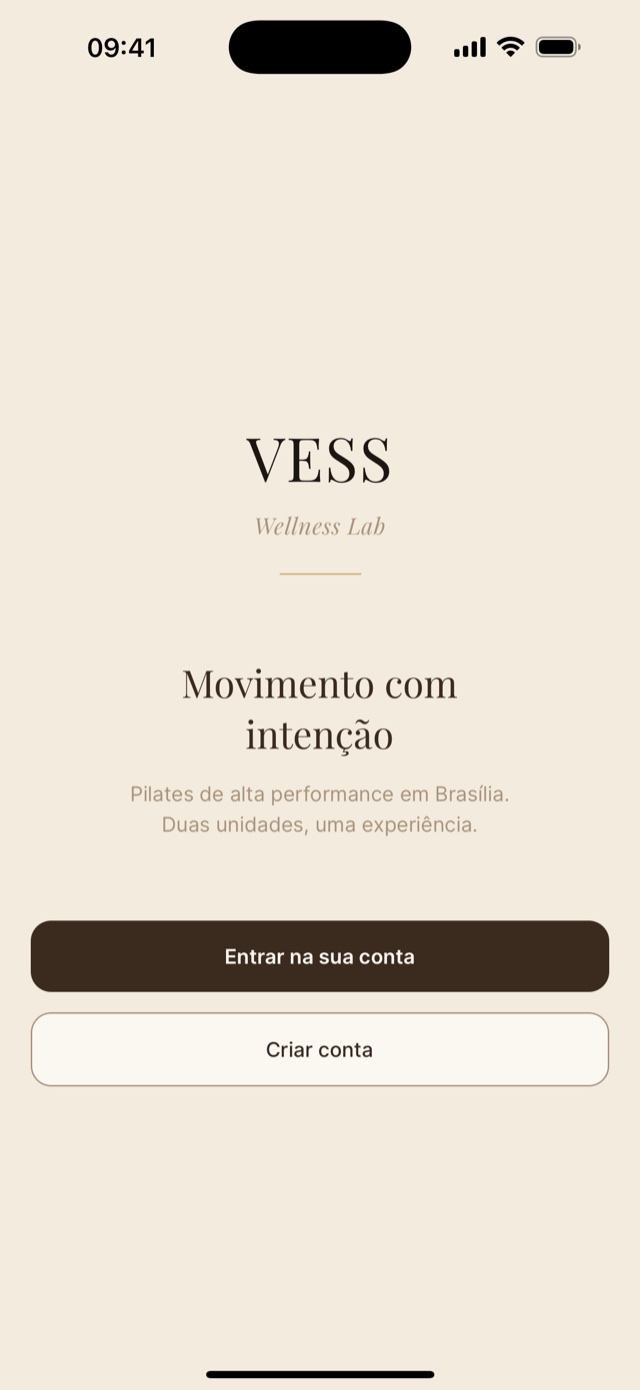
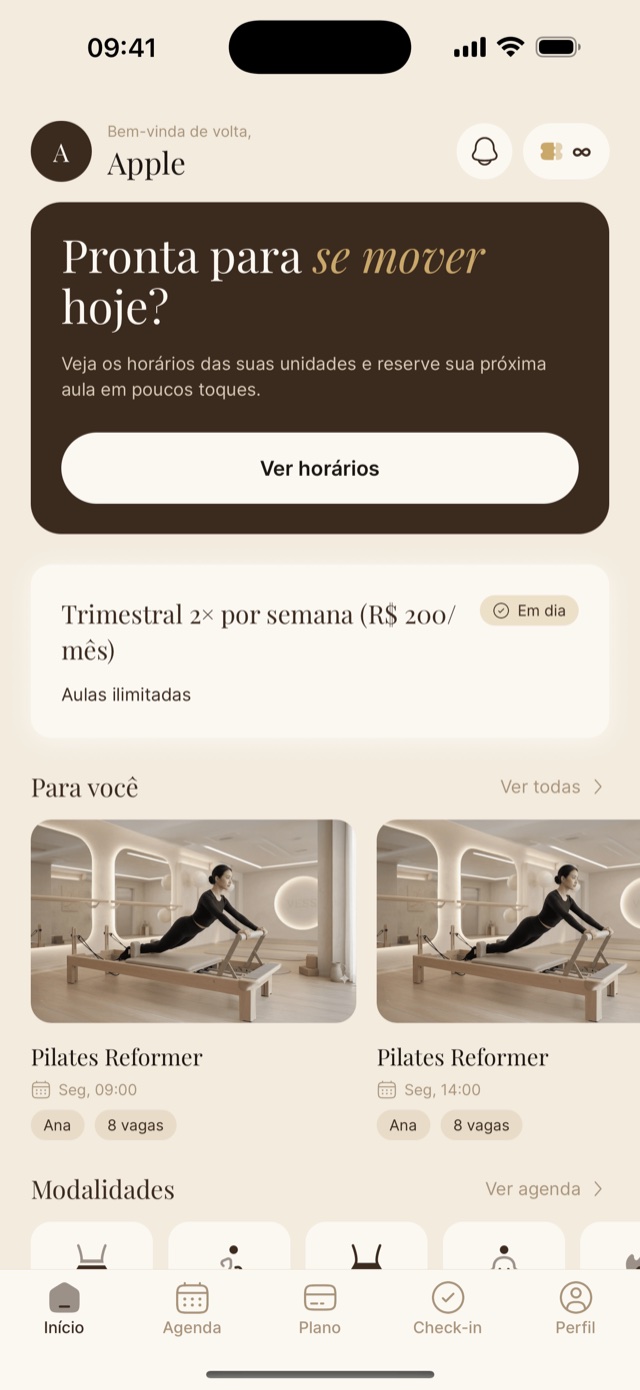
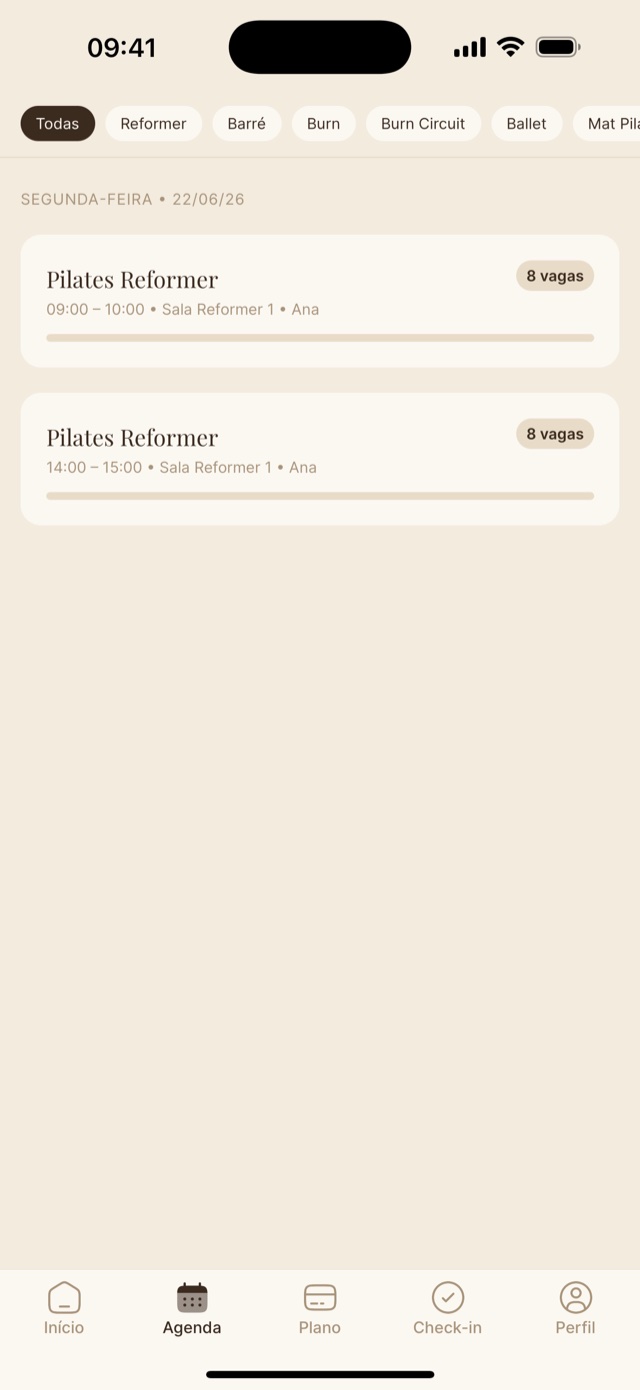
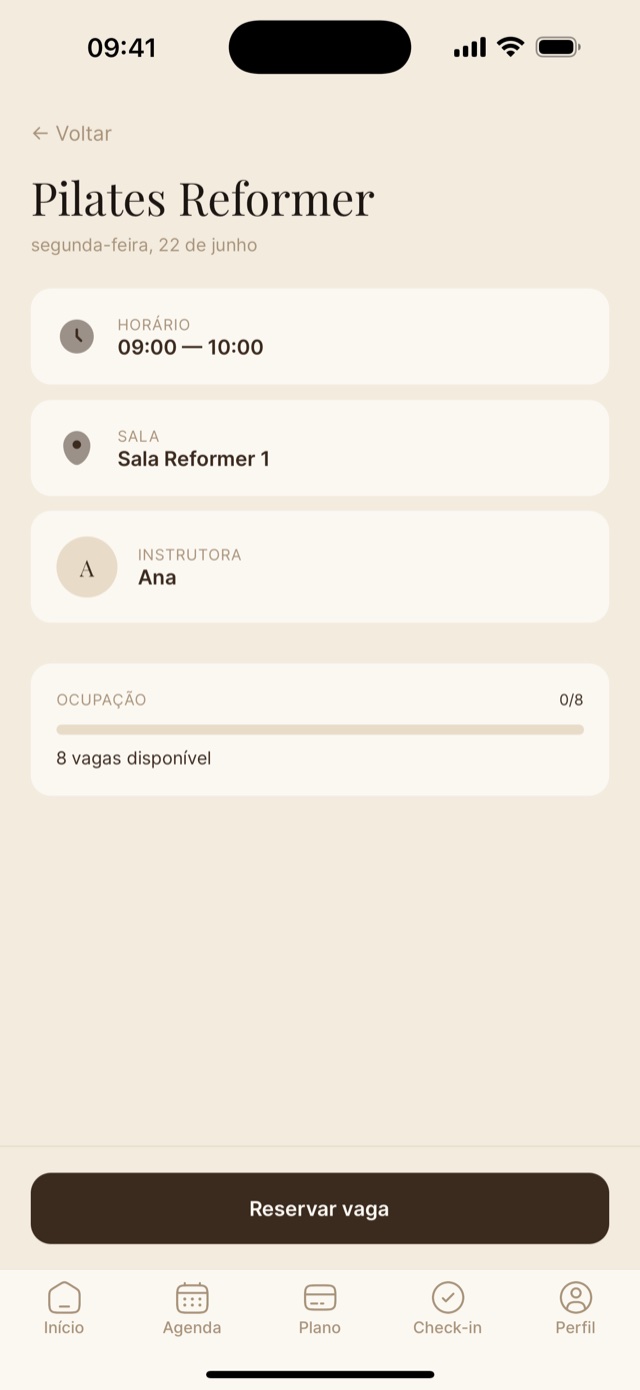
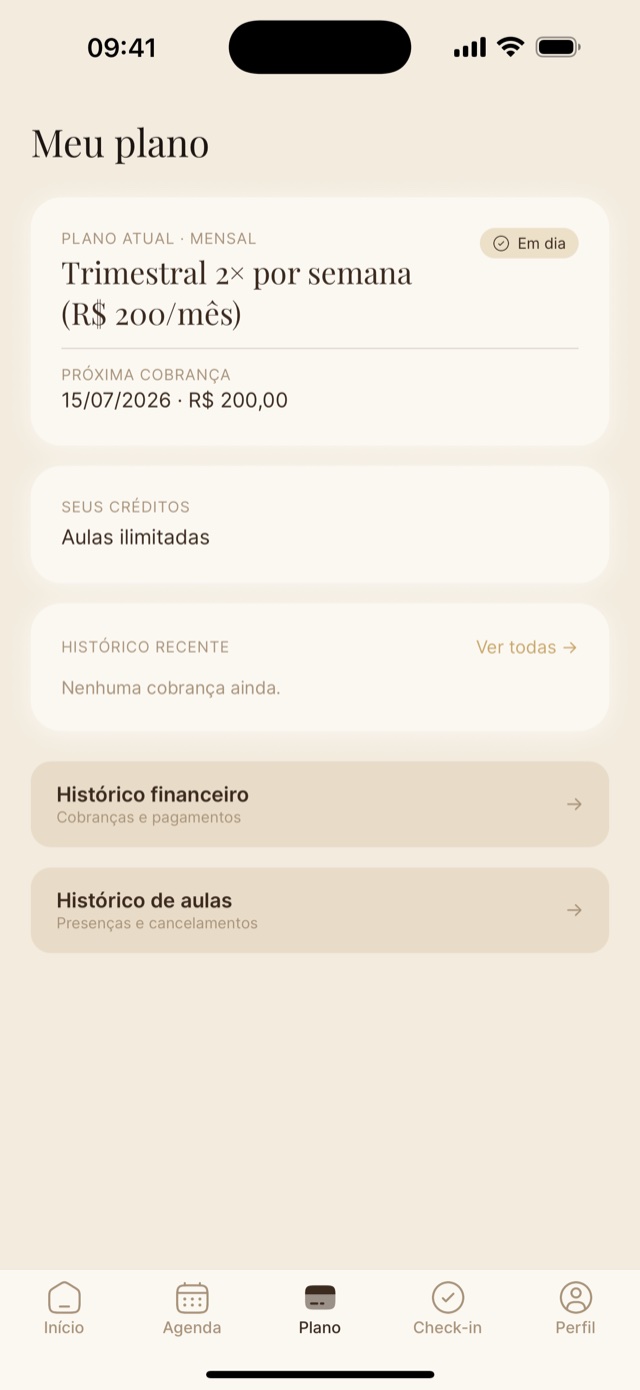
The student’s path through the app, from the welcome screen to her plan.
06 — Outcome
Live at both studios, with real bookings and payments
The system runs both studios with bookings, recurring billing, tax invoices and notifications. Costs no longer grow with the number of students, and the data now belongs to the studio.
The platform keeps evolving in production, with new modules such as contracts with digital acceptance and management reports. The roadmap stays with me, from design to deploy.
07 — How I worked
A team’s work, with AI doing the build and the decisions staying with me
From the commercial proposal to the store, every product decision went through me. I used AI agents to speed up the build, with the discipline of an engineering team: requirements written before code, and critical rules tested automatically before every deploy.
AI brought the speed, and the judgement stayed with me. That is how a whole system, with an app approved on the App Store, got off the ground in twelve weeks.
Outcome
What changed for the studio
- +A system of its own instead of rented SaaS, with no per-student fee
- +The VESS-branded app published on the stores
- +Both studios in one panel, each with its data protected
- +Recurring billing and tax invoices that run on their own, with no double charges
- +Student data in the studio’s hands, compliant with Brazil’s LGPD
Tools
Want a whole product, end to end?
I take it from the first conversation to an app approved on the store, with design and code, in weeks.